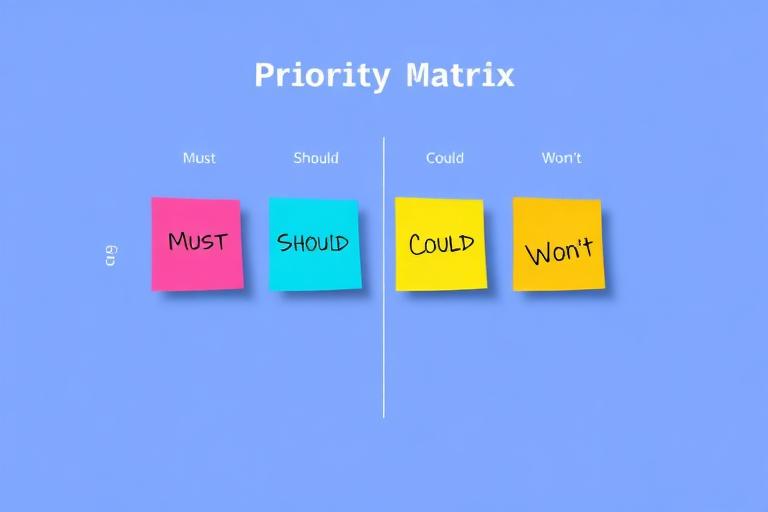
What is MoSCoW?
MoSCoW is a prioritization method that helps you categorize requirements into four categories. It prevents everything from being "important" and gives vendors a clear picture of what is truly essential versus what is flexible.
- Must have — Without these features, the system is not usable
- Should have — Important, but the system also works without it
- Could have — Nice to have if budget and time allow
- Won't have (this time) — Deliberately parked for now
Why MoSCoW for HR Tech?
When selecting HR tech, it's tempting to create a laundry list of 100+ features. The result: every vendor scores "sufficient," and you can't differentiate. MoSCoW forces you to make choices and prevents nice-to-haves from being the deciding factor.
Rule of thumb for distribution:
- Must have: maximum 40% of all requirements
- Should have: ~30%
- Could have: ~20%
- Won't have: ~10%
If more than 40% are "Must have," you need to prioritize more critically.
Template per HR Domain
Core HR Functionality
| Requirement | Priority | Explanation |
|---|---|---|
| Digital employee file | Must | Legally required, daily use |
| Organizational structure management | Must | Basis for reporting and workflows |
| Employee self-service portal | Must | Reduces admin workload by 60% |
| Add custom fields | Should | Flexibility for specific data |
| Document generation (contracts) | Should | Time savings during onboarding |
| Talent profile per employee | Could | Useful for succession planning |
| Gamification elements | Won't | Not a priority in phase 1 |
Leave & Absence
| Requirement | Priority | Explanation |
|---|---|---|
| Leave registration with balance calculation | Must | Core process |
| Manager approval workflow | Must | Compliance and audit trail |
| Absence registration compliant with Wet Verbetering Poortwachter | Must | Legally required (NL) |
| Calendar integration (Outlook/Google) | Should | Ease of use |
| Automatic absence notifications to occupational health service | Should | Process efficiency |
| Team planning overview | Could | Useful for resource planning |
| Predictive absence analytics | Won't | Phase 2 |
Payroll & Compensation
| Requirement | Priority | Explanation |
|---|---|---|
| Integration with payroll provider | Must | Core of payroll processing |
| Manage salary components | Must | Support variable compensation |
| Payslip access for employees | Should | Self-service |
| Benchmark data for salaries | Could | Useful for compensation policy |
| Automatic collective labor agreement adjustments | Could | Relevant for organizations bound by collective labor agreements |
| Crypto/equity compensation tracking | Won't | Not relevant |
Reporting & Analytics
| Requirement | Priority | Explanation |
|---|---|---|
| Standard HR dashboards | Must | Management information |
| Export to Excel/CSV | Must | Flexibility |
| Build custom reports | Should | Specific KPIs |
| Real-time data (no daily delay) | Should | Current decisions |
| Predictive analytics (turnover, absence) | Could | Data maturity required |
| AI-driven insights | Won't | Phase 2 |
How to use this template?
Step 1: Gather input
Have each stakeholder independently provide requirements and assign a priority. This prevents groupthink.
Step 2: Consolidate
Bring all input together and discuss where priorities diverge. These are the main discussion points.
Step 3: Validate the distribution
Check if the distribution follows the rule of thumb (40/30/20/10). If you have 25 Must-haves out of 30 total requirements, you need to go back to the drawing board.
Step 4: Share with vendors
Send the prioritized overview with your RFI or intake. Vendors can then specifically demonstrate how they support the Must-haves and Should-haves.
Step 5: Evaluate
Use the MoSCoW list as the basis for your scorecard. A vendor who covers 100% of the Must-haves but 50% of the Could-haves is better than a vendor who scores 80% everywhere.
Tips for a successful MoSCoW session
- Invite the right people: HR, IT, Finance, and at least one end-user
- Timebox the session: Maximum 2 hours, otherwise the discussion will get bogged down
- Use voting rounds: In case of disagreement, let everyone vote anonymously
- Document the "why": Not just the priority, but also the reason
- Review after demos: Adjust priorities based on what you have seen from vendors
Important: MoSCoW is not a one-time exercise. Review your priorities after each vendor demo and adjust where necessary.